Pediatric Vision Education Hub
Children rely on their vision to learn, play, and connect with the world around them. This hub explores how vision develops, why early eye exams matter, and how visual challenges can affect learning and behavior. Clear vision supports confidence—and early awareness supports lifelong eye health.
Learn the Basics
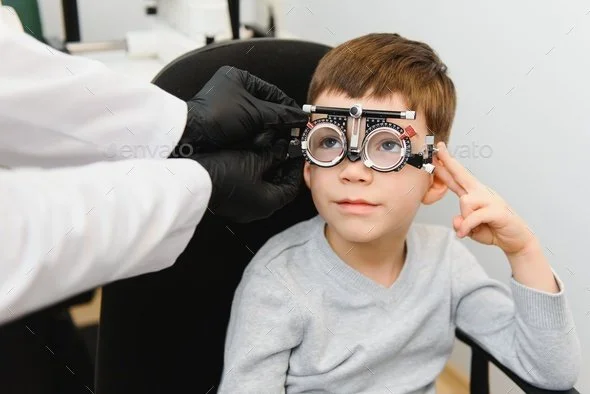
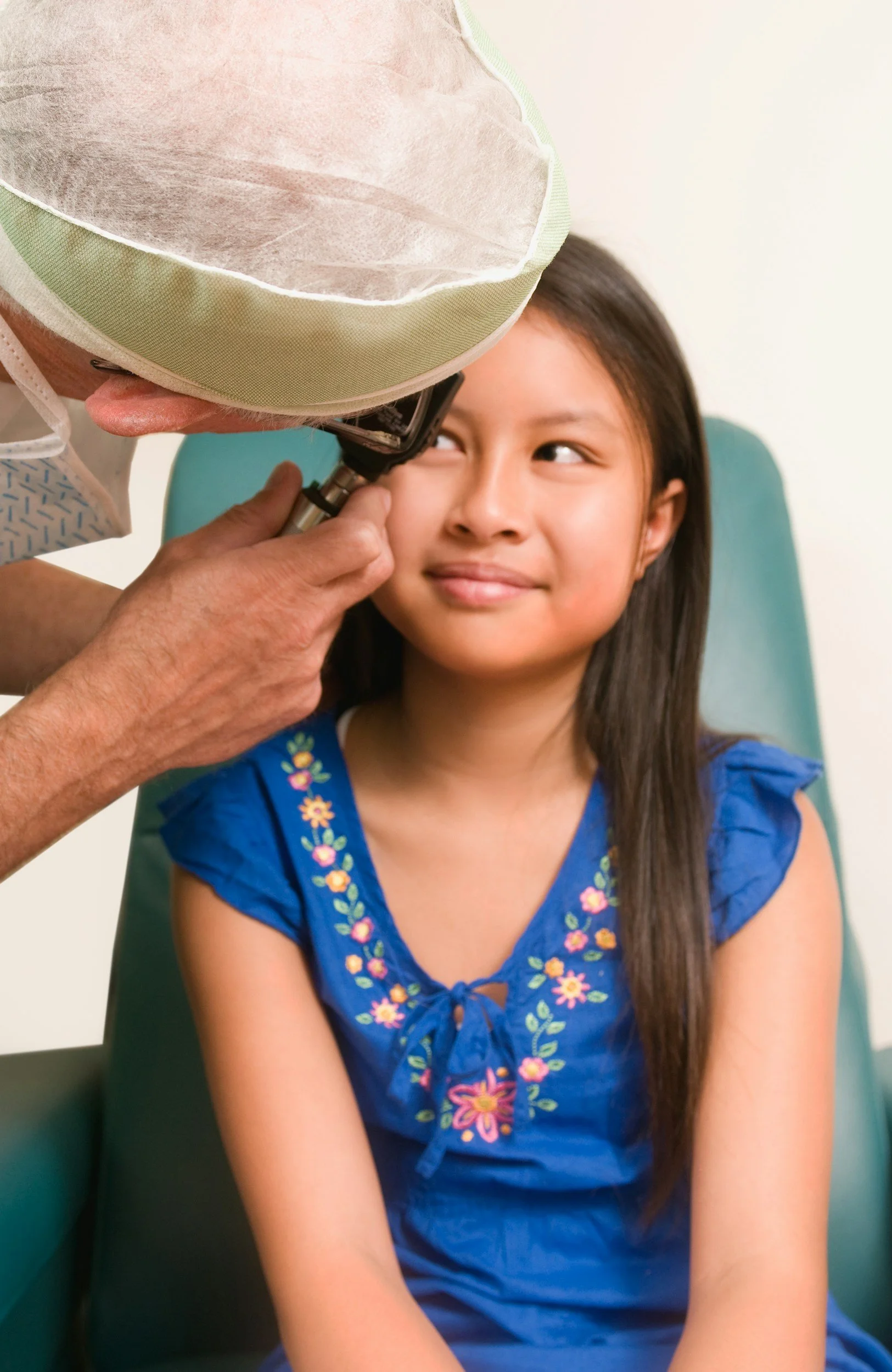
The American Optometric Association recommends that children receive their first eye exams at 6-12 months of age, at least once between ages 3 and 5 and every year while in school. A pediatric eye exam assesses more than basic vision; your eye doctor will also evaluate how the eyes work together as a team and help ensure that your child’s eyes are healthy.
Your Baby’s First Eye Exam: Eye exams for babies rely heavily on objective testing. Your doctor will look for clues such as resistance to occlusion, light reflex, and responses to various visual stimuli in addition to examining the health of your baby’s eyes. Free eye exams are available for through InfantSEE-participating providers.
Dilation Matters: Dilating the pupil with drops allows the eye doctor to examine the child’s eyes more thoroughly. In addition to dilating the pupil the drops also act to temporarily dampen the eye’s near focusing ability— this is why your vision is blurry after a dilated eye exam— to allow for a more accurate determination of the glasses prescription.
Vision & Learning
Up to 80% of classroom learning is visual. Difficulty focusing, eye teaming issues, or blurry distance vision can impact reading, comprehension, attention, and sports performance. Small vision challenges can have big impact on a child’s ability to learn and on their quality of life.
When to Pay Attention
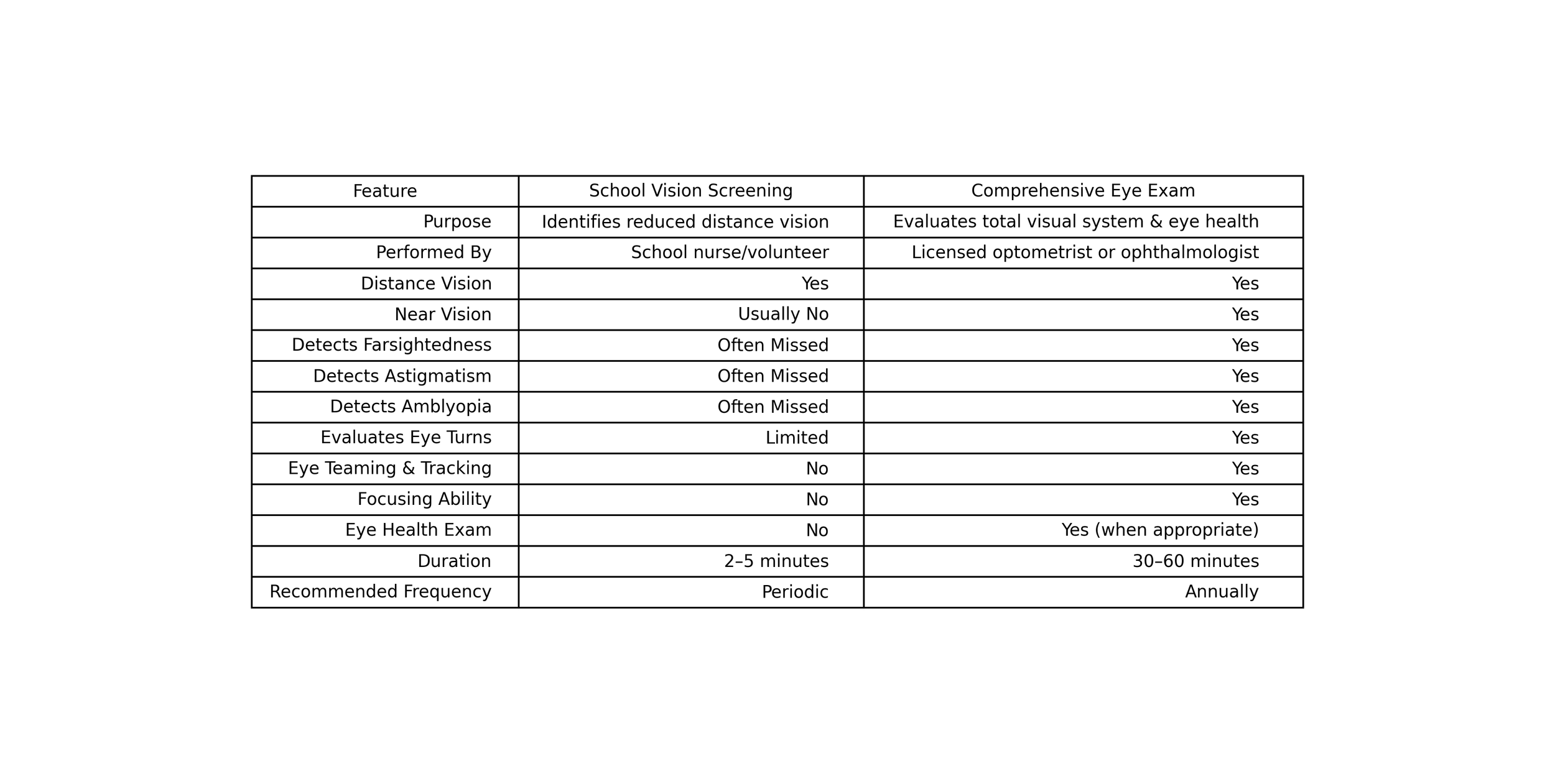
Children often don’t complain about vision problems because they assume their vision is normal. Squinting, headaches, holding devices close, avoiding reading, or declining school performance can all signal that it’s time for an evaluation. Early detection creates the best opportunity for effective treatment. This is why an annual eye exam is the best way to ensure that your child is seeing well.
Vision and Screen Hygiene
Between school work, home work, and entertainment, screen usage is more prevalent than ever before. This means that children today are more likely to experience more eye strain and dry eye